
The Virtual Selling Mindset:
Cultivating Responsibility, Resilience & Rigor
Success in virtual selling starts with your mindset
To defend revenue and even grow throughout the turbulent market conditions of recent years, sales professionals have needed to develop a specific set of Virtual Selling skills. These range from setting up their camera, background, and lighting, to engaging customers through the online medium.
However, developing this new skill set does not address the whole picture. To achieve success when selling virtually, salespeople must not only adapt their approach but their outlook.
In this article, we explore the three characteristics salespeople need to drive success in virtual sales: Resilience, Responsibility, and Rigor.
Responsibility: Taking Ownership of Sales Outcomes
The first characteristic of the virtual mindset is Responsibility; the extent to which the individual takes accountability for the outcome of a given situation.
In every sales process, many events take place at each stage of the buying cycle that will determine whether the sale is successful.
The extent to which we take responsibility for these events can be plotted on the “Locus of Control”, developed by Julian B Rotter in 1954.
To Download our Virtual Selling Mindset PDF please fill in your details below.
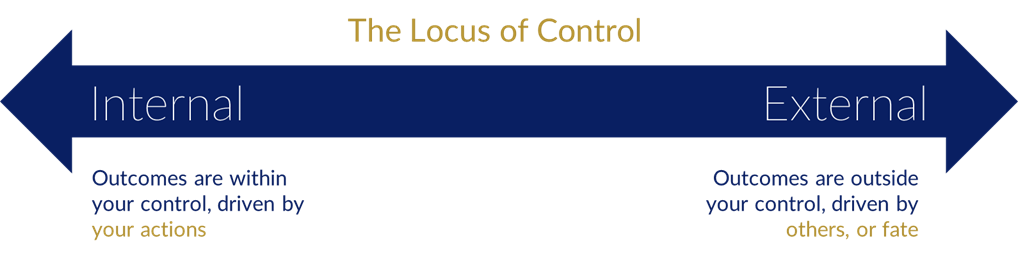
Individuals with a strong internal Locus of Control believe that events result primarily from their own behavior and actions. This belief means that they are more likely to attempt to influence the outcome than those with a high external Locus of Control.
Whilst there is no perfect position to take, an Imparta study discovered that top sales performers shared a strongly internal Locus of Control. They all believed that their performance was under their own control, not purely driven by external factors. As a result, they were bold in their approach, more likely to be proactive in managing their time, and better at working with their own colleagues.
Our Advice:
- Recognize your own locus of control. Listen to your internal dialogue to identify when you’re blaming the customer, your team, the technology, or even the pandemic itself.
- Ask yourself what you could do to anticipate, reduce or work around any issues.
- Equally, don’t try to fix those things that are genuinely outside your control.
Resilience: Bouncing Back from Setbacks in Virtual Sales
A second part of the virtual mindset is Resilience; the ability to bounce back from setbacks.
Virtual selling – whether it’s a group pitch, a 121 meeting, or large workshop to a group of stakeholders – is a journey filled with rejection, failure, and setbacks as well as triumphs.
Resilience is what lets you succeed despite these setbacks.
It comes from breaking the links in the vicious cycle that can happen when things go wrong:
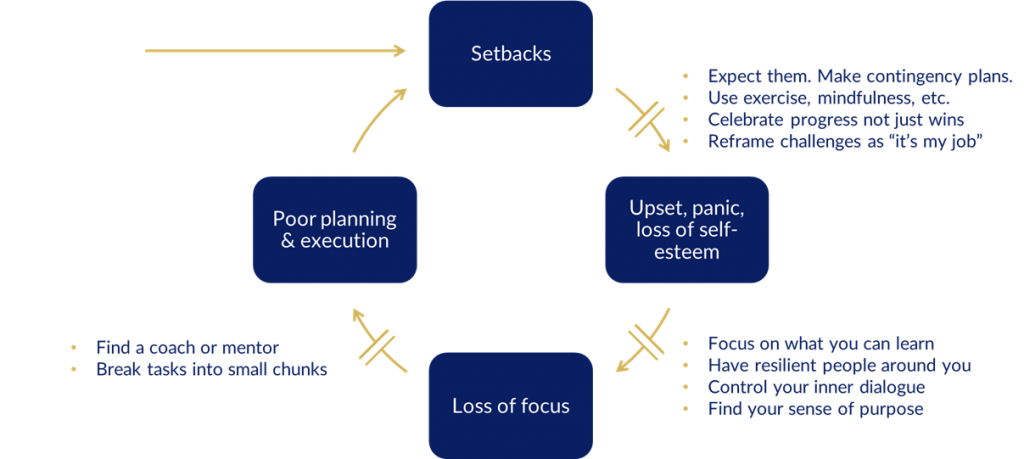
Identify your own cycle, and anticipate the things that can undermine your resilience. Then you can spot when it’s happening, and take steps to break the links in the cycle.
Research shows that having a clear sense of purpose helps you to deal with panic and loss of self-esteem.
Our advice:
- Reduce the impact of setbacks simply by expecting that they’ll happen. Be mentally prepared so that you make contingency plans.
- Stop feelings of panic and loss from interrupting your focus, by concentrating on what you can learn from the loss. If you’re surrounded by positive, resilient people, they’ll also help you to retain your focus.
- Rebuild your self-esteem through your inner dialogue. Tell yourself that you can win the next one… don’t let your subconscious get in the way of your success.
Rigor: Going the Extra Mile to Achieve Sales Goals
The final element of the virtual selling mindset is Rigor; the drive to go the extra mile to achieve your goals.
As a salesperson or sales leader, you are always competing against something, whether that be the status quo, another use for budget or competitors.
If your level of skill and effort falls below a certain threshold, more often than not you lose. Above that threshold, more often than not you win.
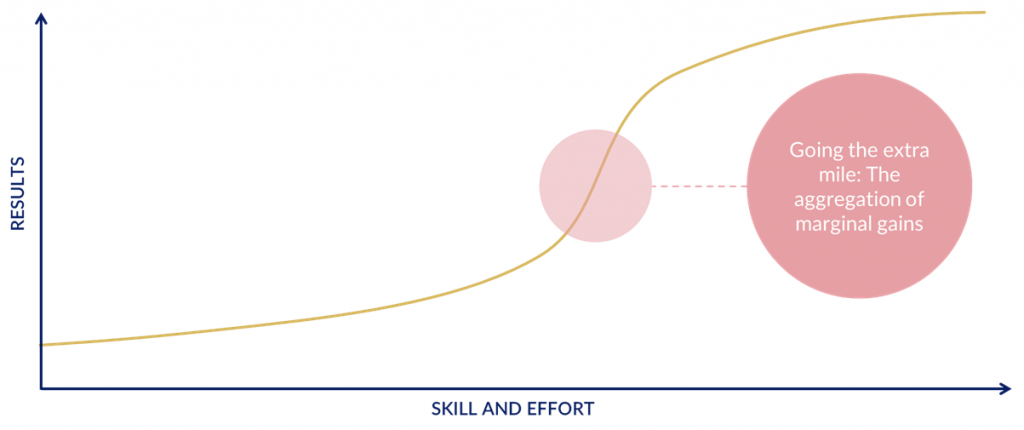
Dave Brailsford, the coach behind the highly successful British cycling team, put it this way: “If you break down everything you could think of that goes into riding a bike, and then improve it by 1 percent, you will get a significant increase when you put them all together.” This can be described as ‘the aggregation of marginal gains’
There is a sharp jump in the performance of virtual selling (and commission) as your skills and effort pass that threshold. And during the pandemic and its economic fallout, the threshold of skill and effort you have to pass in order to succeed has been significantly higher.
The threshold varies from industry to industry, and even from situation to situation, but going the extra mile – and being rigorous – can have a dramatic effect on your outcomes.
In sales, as in so many aspects of life, you make much of your own luck.
Be curious, be persistent, and always go the extra mile.
Our advice:
- Encourage the extra mile in yourself and those supporting your virtual engagement.
- Understand what Rigor means for you. It could be working hard, not taking things for granted, following the process, applying the tools, or checking the presentation one more time.
- Make time to prepare and practice. Focus on the aggregation of marginal gains.
Frequently Asked Questions (FAQs) on Training RFPs
What is meant by a virtual selling mindset in sales?
A virtual selling mindset is the outlook salespeople need to succeed when selling remotely, beyond just technical skills like camera setup or online engagement. It centers on three characteristics Responsibility, Resilience, and Rigor that shape how sellers think, behave, and respond to challenges in virtual environments.
Why is Responsibility important in the virtual selling mindset?
Responsibility is important because it reflects how much a salesperson believes outcomes result from their own actions rather than external factors. Those with a strong internal Locus of Control are more likely to influence events, be proactive with their time, and collaborate effectively with colleagues in virtual selling.
How does Locus of Control relate to virtual selling performance?
Locus of Control describes whether people attribute outcomes to their own actions (internal) or external forces. Imparta’s study found top performers shared a strongly internal Locus of Control, believing their performance was under their control, which made them bolder, more proactive, and more effective in virtual sales.
What role does Resilience play in successful virtual selling?
Resilience in virtual selling is the ability to bounce back from setbacks such as rejected proposals or failed meetings. It involves breaking vicious cycles of panic and low self-esteem, expecting setbacks, learning from losses, and using a clear sense of purpose and positive inner dialogue to maintain focus.
How can salespeople build greater Resilience for virtual selling?
Salespeople can build Resilience by anticipating setbacks, preparing contingency plans, and recognizing their own negative cycles. Focusing on what can be learned from losses, surrounding themselves with positive, resilient colleagues, and consciously rebuilding self-esteem through constructive self-talk helps them sustain performance in virtual selling.
What does Rigor mean in the context of the virtual selling mindset?
Rigor is the drive to go the extra mile to achieve goals in virtual selling. It’s about surpassing the threshold of skill and effort needed to win against competitors, the status quo, or other budget priorities, and reflects disciplined preparation, persistence, and attention to detail in every interaction.
How does the “aggregation of marginal gains” apply to virtual selling?
The “aggregation of marginal gains” means breaking down everything involved in virtual selling and improving each part slightly. Small, consistent improvements in skills, preparation, process, and tools add up to a sharp jump in performance once the overall threshold of effort and capability is crossed.
What practical steps support a strong virtual selling mindset?
Practical steps include recognizing your Locus of Control, focusing on what you can influence, preparing for setbacks, learning from losses, and strengthening inner dialogue. Additionally, make time to prepare and practice, follow agreed processes, apply available tools, and always look for small ways to improve your virtual engagements.
This article has been adapted from Imparta’s Mastering Virtual Presence Training Curriculum and scratches the surface of the behavioral science, research, and leading techniques we deliver to our clients.
If you are looking to take the next step in virtual selling and get first-hand experience of Imparta’s training program, get in touch today.