


Getting Your Managers Coaching
Author: Richard Barkey | Founder and Chief Executive Officer
Why Sales Managers Need Coaching to Break the Pressure Cycle
Putting a salesperson under pressure to produce results without coaching them on the “how” creates a vicious cycle of underperformance. They chase every deal and become flustered. They skim over opportunities rather than dig deeply into them, leading in turn to poor results and more pressure.
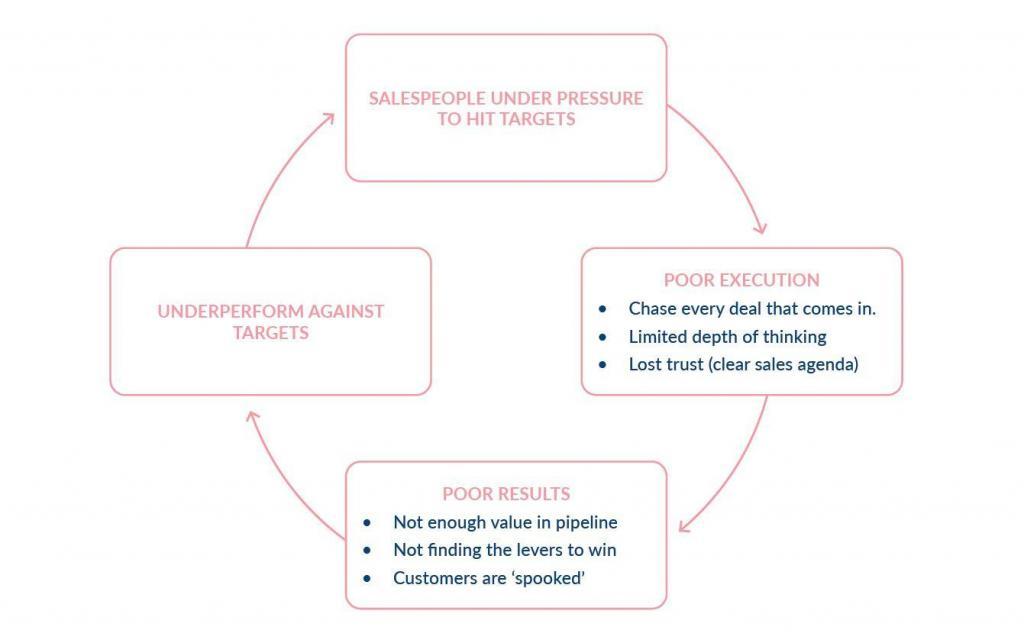
This “pressure cycle” is common even in good times, but it can become endemic in a tough market, and it – as much as the market itself – is the beast to be battled. The flip-side, of course, is that while your competitors are skimming over deals too, there’s a fantastic opportunity to grow market share.
Break Free from Underperformance Cycles
Learn how targeted coaching can unlock your team’s potential for market share growth.
Strategies to Empower Managers: Focus on Activity and Remote Coaching
To break the cycle, you have to go against the grain for many managers. They have to manage activity, not outputs. And not just the quantity of activity, but especially it’s quality.
This requires coaching skills (which hopefully most of your managers have), but they will struggle to find the time when the pressure is on, so you need to refresh their coaching will as well as skill. If travel is difficult they may also have to learn to coach and manage remotely, requiring additional skills around maintaining productivity and positive mindsets.
One good way to kickstart coaching is to run specialist deal pursuits and account clinics to role-model the right behaviours, while also creating valuable revenue.
At Imparta we can deliver manager coaching workshops, deal pursuits and account clinics as workshop sessions, or in virtual workshop environments. Contact us today.
Join 60,000+ Sales Leaders
Get the latest research and frameworks.
By clicking submit below, you consent to allow Imparta to store and process the personal information submitted above to provide you the content requested. Privacy Policy.
Frequently Asked Questions (FAQs)
Why is getting your managers coaching important for sales success?
Getting your managers coaching is crucial because without it, salespeople are pressured to deliver results but not taught “how.” This leads to a cycle of chasing every deal, skimming over opportunities, and underperforming a cycle that worsens under market pressure and undermines long-term revenue growth.
What is the “pressure cycle” described in getting your managers coaching?
The “pressure cycle” occurs when salespeople are pushed for outputs without quality coaching. They rush deals, overlook deeper opportunities, get poor results, and face even more pressure. This cycle can become entrenched in tough markets, hurting performance and morale across the team.
How can the pressure cycle be broken according to getting your managers coaching?
The pressure cycle can be broken by shifting manager focus from managing outputs to managing activity especially the quality of activity. This means prioritising coaching that builds deep selling skills, rather than simply monitoring numbers, and supporting managers to find time and motivation for regular coaching.
Why do sales managers struggle to coach when under pressure?
Sales managers struggle to coach under pressure because immediate targets overshadow development activity, and time feels scarce. Even if they have coaching skills, they may need a refreshed sense of will and practical support especially if remote coaching or maintaining positive mindsets is new for them.
What practical steps can help kickstart a coaching culture among managers?
Running specialist deal pursuits and account clinics can kickstart a coaching culture. These structured sessions role-model good behaviours, deepen opportunity management, create immediate revenue impact, and help managers see the value of quality-focused coaching in action even in virtual settings if travel is difficult.
How does focusing on activity quality not just quantity improve sales results?
Focusing on activity quality means digging deeply into opportunities rather than chasing every lead superficially. When managers coach on the “how,” salespeople develop better strategies, strengthen relationships, and close more valuable deals, creating a virtuous cycle of improved performance and confidence.
What additional skills might managers need to coach effectively in challenging times?
In challenging times, managers may need additional skills such as remote coaching techniques, maintaining productivity at a distance, supporting positive mindsets, and adjusting their own approach to fit virtual environments all while balancing pressure for short-term results with the need for long-term development.
How can organisations support their managers in becoming better coaches?
Organisations can support their managers by offering dedicated workshops, role-modelled clinics, and practical resources focused on both coaching skill and will. Providing virtual or in-person training and reinforcing the importance of activity quality over output alone helps create a sustainable culture of effective sales coaching.